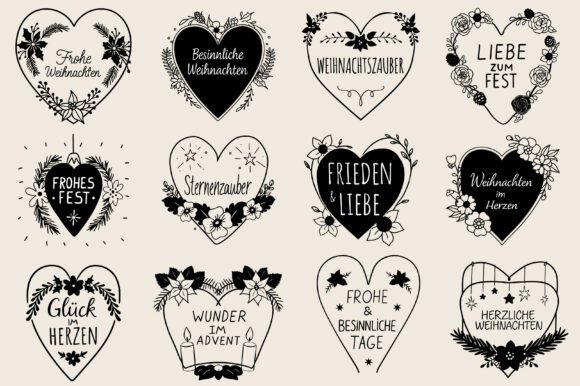
Review: German Christmas Flower Heart Plotter Design
As a designer who has spent countless hours staring at digitized patterns on a screen, only to see them behave differently under the needle, I approach every new machine embroidery design with a mix of excitement and skepticism. The German Christmas Flower Heart Plotter caught my eye not because it was flashy, but because it promised a specific kind of seasonal warmth that is often missing in mass-produced holiday decor. When evaluating a design for real-world application, I am not just looking at aesthetics; I am looking at stitch logic, fabric compatibility, and commercial viability.
First Impressions and Visual Mood
The immediate impression of this design is one of traditional elegance. It avoids the cartoonish traps that many holiday designs fall into, opting instead for a structured, floral motif contained within a heart shape. This combination suggests a product that is both sentimental and sophisticated. For an Etsy seller or a boutique owner, this visual personality is crucial. It speaks to customers who value handmade quality and timeless style over trendy, disposable aesthetics.
The layout feels balanced. The floral elements are not so dense that they create a puckering nightmare, nor so sparse that the design looks unfinished. This balance is vital when considering how the embroidery file will translate to various fabric textures. A design that relies heavily on satin stitch for definition needs precise tension control, while areas using fill stitch must be managed carefully to avoid excessive bulk. From a reviewer’s perspective, the plotter-style lines suggest a clean, linear approach that likely utilizes running stitch effectively for outlining, which can reduce thread consumption and stitching time without sacrificing detail.
Real-World Application: The Tote Bag Test
To truly understand the value of the German Christmas Flower Heart Plotter, I mentally placed it on a canvas tote bag. This is a staple item for any craft business during the holiday season. Imagine a natural, unbleached cotton canvas. The contrast of deep reds, forest greens, and perhaps a touch of gold thread against the neutral background would create a striking finished product.
In this scenario, the design serves as a focal point. It is large enough to be seen from a distance but detailed enough to invite closer inspection. For a small shop product, this level of detail signals professionalism. Customers often equate complex, clean stitching with higher value. If I were producing these for a holiday market, I would ensure the hoop size accommodates the full breadth of the heart without crowding the edges. A cramped design looks amateurish; a well-spaced one looks intentional.
Beyond tote bags, this design translates beautifully to sweatshirt embroidery. Placed on the left chest of a heather grey crewneck, it becomes a subtle yet festive statement piece. For custom apparel, the scalability of the design is key. If the digitizer has created multiple sizes, the smaller version must retain its clarity. Tiny details can get lost in thick fleece, so checking the stitch density for smaller iterations is a mandatory step before cutting into client garments.
Navigating Fabric and Technical Challenges
While the design is versatile, it is not without its technical demands. Embroidery is a tactile medium, and the German Christmas Flower Heart Plotter interacts differently with various materials. On thin or stretchy fabrics, such as jersey knits used for baby embroidery projects, stabilization is non-negotiable. A cut-away stabilizer would be my recommendation to prevent distortion over time, especially since hearts are symmetrical shapes where any warping becomes immediately obvious.
Dark fabrics present another challenge. If you plan to use this on navy or black velvet for a luxurious holiday pillow cover, you must test your thread colors rigorously. Some shades may disappear into the background. Using a lighter underlay or choosing threads with a high sheen can help the design pop. Additionally, curved surfaces like caps require careful hooping. The center of the heart must align perfectly with the cap’s seam or center line, or the entire design will look off-balance. This is where experience matters; a personalized gift ruined by poor placement is a gift rejected.
For those interested in applique design techniques, this pattern could potentially be adapted. If the original file is not an applique, a skilled digitizer might modify it to include fabric layers, reducing stitch count and adding texture. However, always verify the license terms before modifying or reselling such adaptations.
Commercial Viability and Brand Consistency
For digital product sellers and creative entrepreneurs, the question is always: will this sell? The answer lies in the versatility of the theme. Christmas is a massive market, but it is also saturated. Designs that feel generic struggle to stand out. The German Christmas Flower Heart Plotter offers a niche appeal—European, traditional, and heartfelt. This specificity helps build brand consistency for shops that focus on rustic, vintage, or heirloom-quality items.
When creating printable mockup assets for your online store, ensure the digital representation matches the stitched reality. Over-saturated photos can mislead buyers. Show the texture of the thread. Highlight the slight raise of the stitches. This transparency builds customer trust. Buyers want to know what they are getting. A clear, honest presentation of the embroidery project reduces return rates and increases positive reviews.
Practical Designer Notes for Best Results
Before committing to a large production run or selling this as a commercial embroidery asset, follow these practical steps:
- Test on Scrap Fabric: Never stitch directly on your final garment. Use a similar weight and weave to check for puckering or thread breaks.
- Check Stitch Density: High density can cause needle heat and thread breakage. If the design feels stiff after stitching, consider reducing the density in your software if you have editing capabilities.
- Verify Hoop Size: Ensure your machine’s hoop can accommodate the largest version of the design. Do not attempt to "hoop hop" unless you are highly experienced, as alignment errors are common.
- Contrast Testing: Stitch the design in black and white first. If the details disappear in monochrome, they may lack definition in color too. This is a quick way to assess clarity.
- Licensing Confirmation: Always read the license agreement. Some digital embroidery files allow unlimited physical sales but prohibit sharing the file itself. Others may have restrictions on the number of items you can produce. Respect intellectual property to protect your craft business.
In the realm of Crafts, success is often determined by the small details. The German Christmas Flower Heart Plotter is a strong contender for holiday collections, provided it is handled with technical care. It offers a blend of tradition and modern cleanliness that appeals to a wide audience. Whether you are creating a holiday embroidery accent for a kitchen towel or a standout embroidered patch for a jacket, this design rewards attention to detail. By respecting the material constraints and prioritizing quality execution, you can transform a simple digital file into a cherished handmade product that resonates with customers long after the holidays have passed.